Confession time: I have the attention span of a goldfish with Alzheimer’s. An undiagnosed ADHD condition has led to both various school teachers pulling their hair out and an interesting career experience, with various bosses commenting on my struggle sometimes to take information in. Thankfully, since the diagnosis, I’ve learned how to manage symptoms and the last company I worked for was extremely supportive and overall was a joy to work for.
What does this have to do with filmmaking/content creation? Well, after twenty seconds, I can zone out - as most people do. When watching films at home, I can become distracted quite easily and sometimes have to rewind a bit. Thank god for cinemas which provide attention-focus spaces: yet another reason to keep going and support them.
Even if you are of a neurotypical status, watching recorded interviews can seem quite long and it is easy to start looking around the room or yer phone. Two years ago, a documentary at a film festival left most of the audience commenting afterwards how they couldn’t wait for it to finish as the interviews seemed to go on for an eternity. And recently, I was given a commission to work on interview footage which was recorded under limited conditions. How could I keep the viewer interested?
B-Roll, in case you do not know, is supporting or alternating footage shown during documentaries and news reports. It can provide visual content and “help to illustrate a story”. Examples of B-Roll are photographs, news articles, re-enactments, and any old footage which helps to support the story (previous footage of concerts, sporting events, what life was like in ye days of old etc.). B-Roll can really help to emphasise points and add so much strength and flavour.
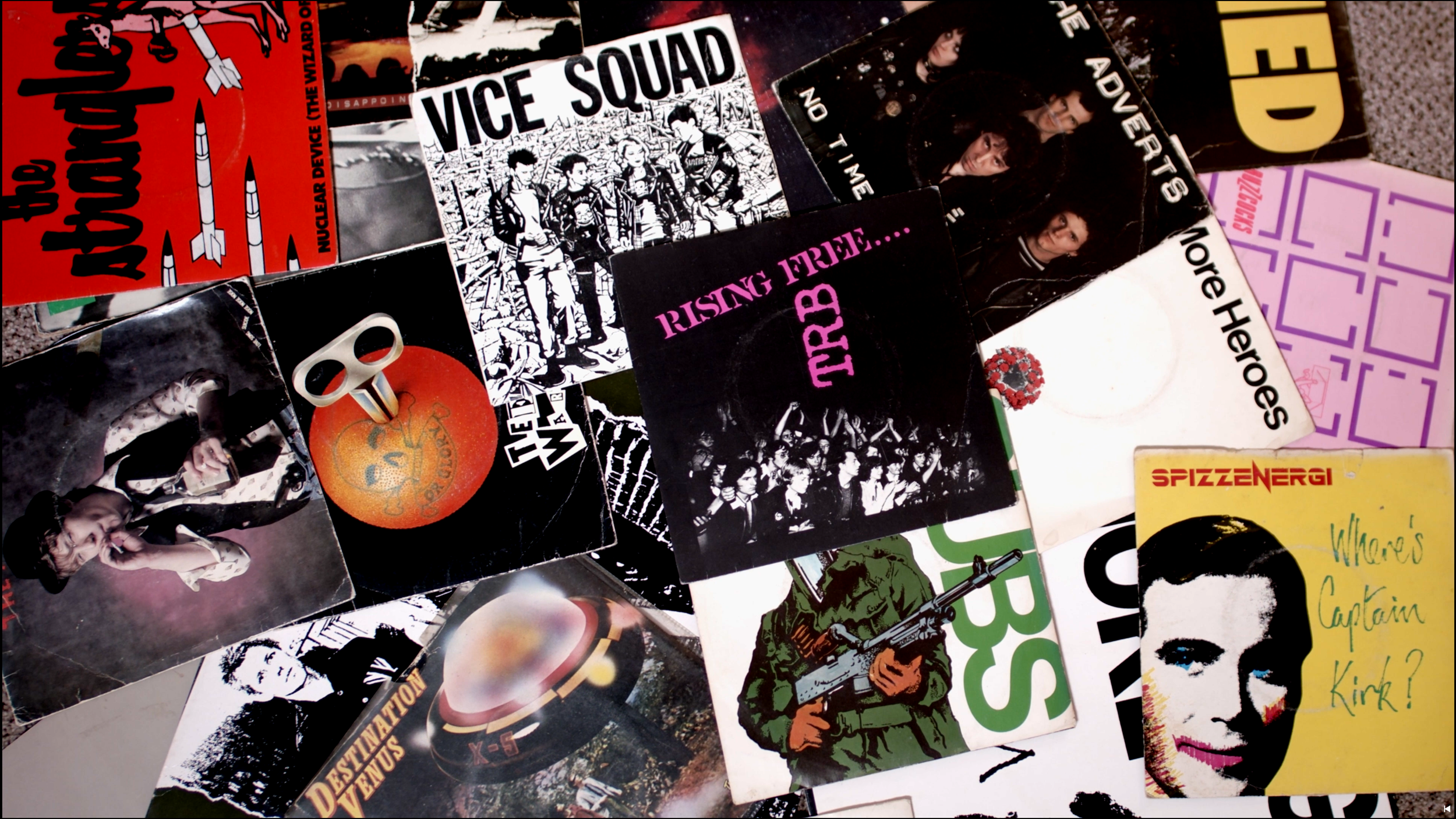
B-Roll such as record covers were used in the award-winning ‘My First Punk Gig’ series.
Access to B-Roll can be problematic. People do hold rights and seeing their material used without permission in a documentary can be insulting. Also, as I found out to my horror during the making of My First Punk Gig Episode 3, archival footage can be expensive, and you may not get newspaper permission too. So what can you do instead?
Get creative. B-Roll is, for me personally, where the magic of documentary starts to happen. There are a number of cheap methods in which B-Roll can be acquired. Here’s some suggestions:
- Think of ways for re-creation of events. In My First Punk Gig - Derek’s Tale, my main contributor had no photographs of himself thanks to a house burglary. He was an artist, and a cheap and interesting way for reproductions was to show him drawing the people he was talking about. This method, although pretty basic, seemed to have worked okay looks up from his laptop at the two awards on his shelf*.
- A wise filmmaker gave me an absolute golden tip: film as much of the interview room and surroundings as possible. If in a restaurant or cafe, film the waiter lighting a candle. Film the outside of the venue and the contributor walking in for an establishing shot. Film the sound recordist miking up the contributor. Film the lights being switched on. Films paintings on the wall. And, if making a documentary, include the footage of the clapperboard and the shot being called. You will be surprised how much these small clips can actually make for a change of pace (thank you Mr Simpson).
- Don’t be afraid to steal ideas find inspiration from fiction films. A sudden speed-ramped close-up of tools used for fashion in the next episode of Punk Gig may just have been ‘inspired’ from a recent Netflix horror. A split-screen image also may have also been ‘inspired’ from a recent Glasgow Film Festival favourite from a prominent director (any guesses which one, folks?) And no doubt those directors and filmmakers were ‘inspired’ by other things they themselves had seen. I have a whamdinger of an idea should I ever get a chance to do another Punk Gig episode and if the contributor is focusing in more recent times, again ‘inspired’ by a recent Korean drama viewing.
- If filming in 4K or a good enough range, a sudden smash-in shot can really help highlight an emotional point or bring some dramatic emphasis. This was again used in Derek’s Tale, at a point where the contributor was and really helps if you are only filming with one camera/cameraphone.
- For promotional videos, screen recordings provided a good solution from the case study above. Recording relevant sections of company websites provided a cheap, easy and quick way to emphasise points made by the contributors.
- And of course, ask the contributor for photographs (making sure you have permission from anyone included in the picture). Permission should be part of the talent release form, and there are plenty templates available - try Screenbinder if you are stuck.
So what B-Roll methods have you used? Bring it on!
That’s the last of the ‘We’ll Fix It Before Post’ articles but feel free to contact me for a chat about all things documentary.
*I’m not gloating, honest! There were plenty of festivals that the film didn’t even get into - hmm, maybe that’s an idea for another article…